Freelance Sites to Start Earning
Back in 2019, I had $200 in my bank account and a rent bill coming up in three weeks.
I wasn’t broke because I lacked skills — I was a decent writer, knew my way around Canva and Photoshop, and had been building WordPress sites as a hobby for two years. I was broke because I had no idea how to sell those skills. A friend texted me: “Dude, just put yourself on Upwork.” I thought it sounded sketchy. Like one of those “work from home!” ads you’d see on telephone poles in 2005.
I almost ignored her.
I didn’t. And within six weeks, I had made over $800 on the side, part-time, from my apartment, wearing the same hoodie three days in a row.
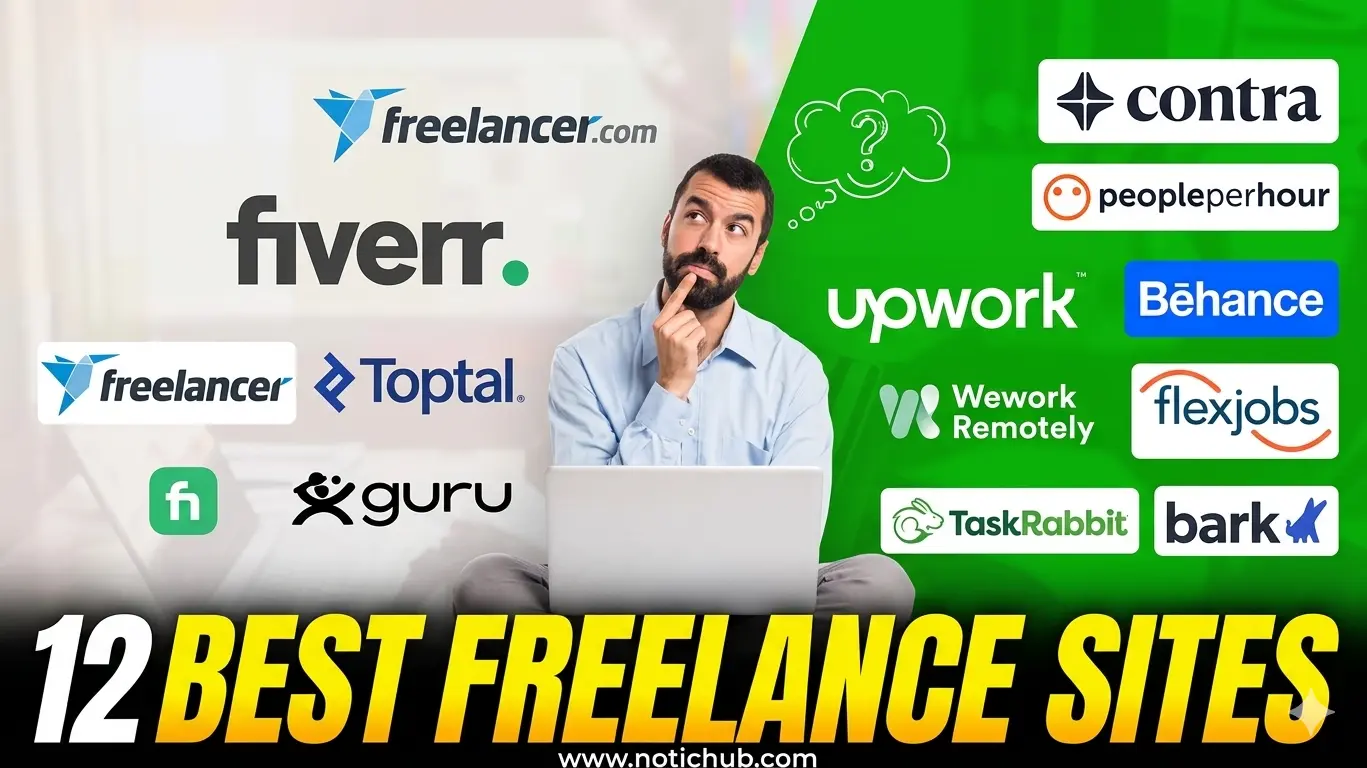
That experience taught me something important: the platform you choose matters a lot. I’ve since tried most of the major freelance marketplaces — some were goldmines, some were time sucks, and a few nearly broke my spirit. So here’s a real breakdown of 12 freelance sites that can actually help you earn money, based on what’s worked, what’s flopped, and what I wish someone had told me earlier.
1. Upwork — The Big Leagues (Worth the Learning Curve)
Upwork is the one I started with, and it’s still the one I come back to most.
It’s massive — millions of clients post jobs here every week, across every category imaginable: writing, design, development, virtual assistance, video editing, accounting, and more. The quality of clients ranges from “amazing long-term partner” to “will message you at 2 AM asking for infinite revisions.”
What to know going in: Upwork uses a “Connects” system — you spend credits to apply for jobs. New accounts get some for free, but you’ll need to be strategic with your proposals. Don’t spray-and-pray. Read each job post carefully and write proposals that speak directly to the client’s actual problem. Generic proposals get ignored.
The platform takes a 10% service fee now (it used to be tiered, but they simplified it). That’s not bad once you’re pulling in consistent work.
2. Fiverr — Great for Packaging Your Skills as Products
Fiverr flipped the script on freelancing. Instead of bidding on jobs, you create “Gigs” — packaged services with fixed prices — and clients come to you.
The name comes from the original idea that everything costs $5. That era is long gone. Experienced sellers on Fiverr regularly charge $200–$2,000+ per project.
I had a friend who sold logo design packages here. She started at $25, and within eight months — after collecting reviews and refining her packages — she was charging $250 per logo with a two-week backlog of orders.
The catch: When you’re new, getting those first few reviews is the hardest part. Some people start at a low price just to build social proof, then raise rates. It’s a grind upfront, but can become fairly passive income once you’re established.
3. Toptal — If You’re Genuinely Elite
Toptal is selective to the point of being intimidating. They claim to accept only the top 3% of applicants. The screening process involves multiple interviews and technical tests.
But if you get in? The pay is exceptional. We’re talking $60–$200+ per hour for developers, designers, and finance professionals. Clients on Toptal are serious businesses — not someone looking to pay $10 for a 1,000-word article.
I’ve personally never gotten through their process (their development standards are above my pay grade), but two people I know who did are now earning full-time incomes entirely through Toptal with minimal time spent hunting for work.
4. Freelancer.com — High Volume, Competitive Bidding
Freelancer is one of the oldest platforms in the game. It works similarly to Upwork — you bid on posted jobs — but it tends to attract a more international, price-competitive crowd.
Honest take: I’ve found it harder to win quality jobs here because the race-to-the-bottom bidding can be intense. But it’s also huge, which means there are opportunities if you’re patient and strategic about the categories you target.
One tactic that works: enter their contests. Clients post a brief, you submit a design or piece of writing, and winners get paid. It’s risky (no guaranteed pay), but winning a few builds your profile fast.
5. PeoplePerHour — Underrated and Worth Trying
Not enough people talk about PeoplePerHour, and that’s honestly their loss. It’s a UK-based platform that has expanded globally, and the competition level is noticeably lower than Upwork or Fiverr.
It uses a hybrid model — you can either bid on projects OR create “Hourlies” (their version of Gigs). The client base skews toward small-to-medium UK and European businesses, which often have decent budgets.
I landed a three-month content writing contract through PeoplePerHour that I never would have found on Upwork — simply because there were fewer competitors applying.
6. Guru — The Quiet Workhorse
Guru doesn’t get much hype in the freelancing community, but it’s been around since 1998, which means it has a stable, serious user base.
The WorkRoom feature is genuinely nice — it keeps all communication, files, and milestones in one organized place, which reduces the chaos of managing multiple clients. Payments are safe through their SafePay system.
The platform has a lower volume of jobs compared to Upwork, but the clients tend to be more professional and less likely to ghost you mid-project.
7. 99designs — Made for Designers, Full Stop
If you’re a graphic designer, brand identity designer, or illustrator, 99designs is worth knowing. It specializes entirely in design work — logos, book covers, packaging, websites, t-shirts, and more.
Like Freelancer, it uses a contest model in which multiple designers submit work, and the client picks a winner. Critics say it normalizes working for free. That’s a fair debate. But for newer designers trying to build a portfolio fast, winning even one or two contests can be a serious credibility boost.
They also have a direct hire feature where clients specifically seek out designers, which is where the real money tends to live.
8. Contra — The Modern, Commission-Free Option
Contra is newer and has been making noise in the freelancing world for one specific reason: zero platform fees. You keep 100% of what you earn.
It’s built around the idea of independent work as a lifestyle — the UI feels more like a creative portfolio platform than a gig marketplace. It’s especially popular among younger freelancers in design, content, and tech.
The client pool is still growing (it doesn’t have Upwork’s volume yet), but the quality of opportunities is solid, and the fee structure alone makes it worth having a profile there.
9. Hubstaff Talent — Completely Free for Both Sides
Hubstaff Talent is the freelance marketplace arm of Hubstaff (the time-tracking tool). There are no fees — not for freelancers, not for clients. It’s basically a directory where you list your skills and rates, and clients reach out to you directly.
It’s not going to replace Upwork in terms of volume, but it’s a low-effort platform to be listed on. Set up your profile once, and occasionally you’ll get inbound inquiries. I’ve gotten two legitimate contracts from Hubstaff Talent with zero active effort on my part.
10. Solid Gigs — For People Who Hate the Bidding Game
Solid Gigs isn’t a marketplace — it’s a curated job leads service. You pay a monthly subscription (~$21), and they send you a daily list of the best freelance job postings scraped from across the internet: LinkedIn, Indeed, company websites, niche job boards.
This one changed how I spent my mornings. Instead of sifting through dozens of terrible listings, I’d get 5–10 pre-vetted opportunities. Less noise. More signal.
It’s not for complete beginners (you still need a portfolio to apply), but if you’re past that stage and just want quality leads without the platform politics, it’s worth the subscription cost.
11. LinkedIn — Underused and Incredibly Powerful
LinkedIn is not technically a “freelance site,” but ignoring it would be a mistake.
Some of my best-paying freelance gigs have come through LinkedIn — not from job posts, but from clients who found me because my profile was optimized correctly. LinkedIn’s “Open to Work” feature lets you signal you’re available for freelance projects without broadcasting it publicly to employers.
The real play here is content. Post consistently about your area of expertise. Share a case study. Give away one useful tip per week. After a few months of doing this, you start attracting inbound inquiries that pay significantly more than platform jobs — because the client already trusts you before they even send a message.
12. Your Own Website — The One Asset You Actually Own
Every platform on this list takes a cut, can ban your account, change their algorithm, or shut down tomorrow. Your own website can’t do any of that.
I built a simple three-page site — home, portfolio, contact — using WordPress and a $15/year domain. It took one afternoon. Within four months, I was getting inquiries directly from Google searches. No middleman. No fees. No competing against 200 other proposals.
Tools like Webflow, Carrd, and WordPress make this easier than ever. Pair your site with a Google Business Profile and some basic SEO, and you’ve got a lead-generation machine that works in the background while you sleep.
Where to Actually Start
If you’re completely new: Fiverr + Upwork. Create profiles on both, spend a week writing a great bio and building even a basic portfolio (you can create sample pieces — real clients don’t always care if it’s spec work), then start applying.
If you have experience but need better clients: LinkedIn content + your own site. These take longer to pay off but produce higher-quality, higher-paying relationships.
If you’re a designer: 99designs or Contra in addition to Fiverr.
If you’re technical: Toptal if you’re elite, Upwork if you’re building toward it.
The money is real. The work is real. The only thing standing between you and a first paycheck is a complete profile and a few solid proposals.
If you’re ready to turn your skills into income, check out our full guide on the The Essential Guide to Entry-Level IT Jobs and Salaries.
Hey, have you heard about sam68? I saw it pop up and it looks pretty good. Might be worth a look. You can find it by searching sam68.