Guide From Someone Who Started With Zero Clue
I still remember the day my cousin called me, slightly panicking, because her small clothing business wasn’t getting any sales from Instagram. She’d been posting regularly, using hashtags like crazy, and even paid someone on Fiverr $50 to “boost her brand.” Nothing worked.
That was three years ago. Today, she runs her own digital marketing for the business and consistently brings in orders through organic content and a tiny ad budget. The difference? She actually learned how digital marketing works — properly, from the ground up.
I walked her through a lot of it. And honestly, teaching her made me realize just how overwhelming this field looks from the outside, and how approachable it actually is once you break it down.
So if you’re sitting there wondering where even to begin — this guide is for you.
First, Drop the “I Need to Learn Everything” Mindset
This is the mistake almost everyone makes at the start. You Google “how to learn digital marketing,” land on a course syllabus with 47 modules covering SEO, PPC, email marketing, social media, affiliate marketing, content strategy, analytics, and video marketing — and immediately feel like your brain is melting.
Here’s the truth: digital marketing is an umbrella term. Nobody masters all of it at once. Even professionals who’ve been in the industry for years usually specialize in one or two areas.
Start by understanding the landscape, then pick a lane.
Step 1: Understand What Digital Marketing Actually Covers
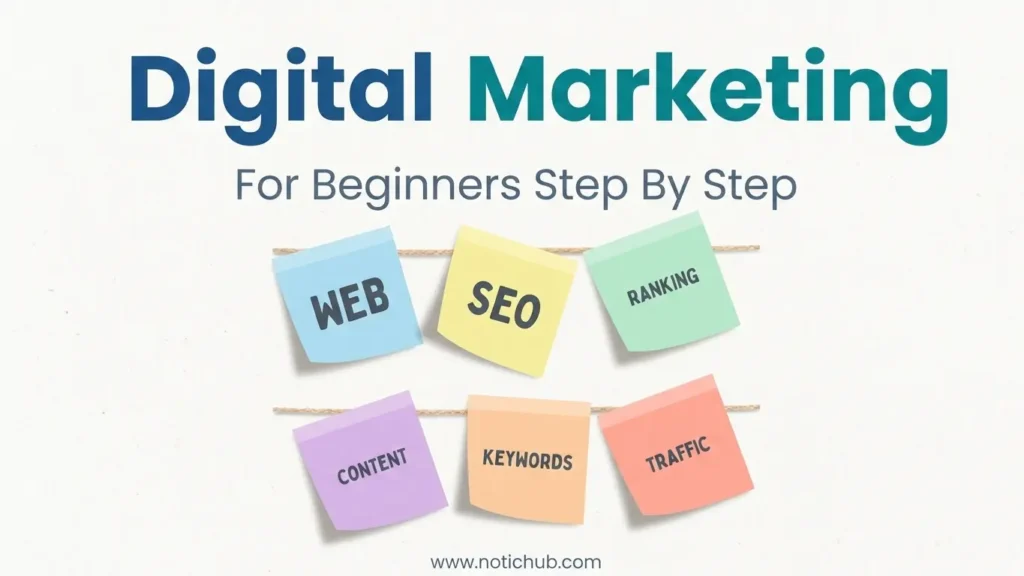
Before diving into courses, spend a few days just getting familiar with the major branches:
- SEO (Search Engine Optimization) — Getting your content to rank on Google
- Content Marketing — Blogs, videos, newsletters that attract and engage audiences
- Social Media Marketing — Platforms like Instagram, LinkedIn, TikTok, Facebook
- Email Marketing — Building a list and nurturing it with emails
- Paid Advertising (PPC) — Running ads on Google, Meta, and YouTube
- Affiliate Marketing — Promoting other people’s products for a commission
- Analytics — Understanding data to make smarter decisions
You don’t need to deep-dive yet. Just read one beginner article on each. YouTube is great for this. Search for something like “what is SEO in 5 minutes” and watch a couple of videos. By the end of the week, you’ll have a mental map of the field.
Step 2: Pick ONE Area to Start With (Seriously, Just One)
After my cousin understood the basics, I asked her: “Where do your customers hang out?” The answer was Instagram and WhatsApp. So we focused on social media marketing and content strategy — nothing else for the first two months.
The same logic applies to you. Ask yourself:
- Do you want to work for a company or freelance?
- Do you have a business you’re trying to grow, or are you building a career?
- What platforms do your target customers actually use?
If you’re doing freelancing or job hunting, SEO and Google Ads are probably the most in-demand and well-paying skills to start with. If you’re building a personal brand or small business, start with content marketing and one social platform.
Don’t spread yourself thin. Go deep on one thing first.
Step 3: Use Free Resources Before Paying for Anything
I know the internet is full of $999 masterclasses promising six-figure income in 30 days. Ignore them — at least for now.
There’s genuinely great free content out there:
Google’s own courses:
- Google Digital Garage — “Fundamentals of Digital Marketing” is free and gives you a certification
- Google Skillshop — Free courses on Google Ads and Analytics
HubSpot Academy: Go to academy.hubspot.com. Their courses on inbound marketing, email marketing, and content marketing are completely free with certificates. These are respected in the industry.
YouTube channels worth bookmarking:
- Neil Patel’s channel — Good for SEO and content marketing
- Ahrefs — Incredibly detailed SEO tutorials
- Think Media — Great for YouTube and video marketing
- Income School — Honest, no-hype content marketing advice
Meta Blueprint: If you’re interested in Facebook and Instagram ads, Meta has its own free training at facebookblueprint.com.
Spend at least 4–6 weeks just going through free resources before you consider spending money on a paid course.
Step 4: Learn By Doing — Not Just Watching
This is where most beginners get stuck. They finish course after course, collect certificates, and then freeze when someone asks them to actually run a campaign or write a content strategy.
The fix: start a real project as early as possible.
It doesn’t have to be for a client. It can be:
- A blog on any topic you genuinely enjoy (travel, cooking, fitness, gadgets, anything)
- An Instagram page for a mock brand or your own hobby
- A free Google Ads campaign on a $5–10 budget just to see how it works
When my cousin was learning, she ran a small Instagram giveaway campaign for her own business. It wasn’t perfect — her caption was too long, the CTA was buried, and she picked the wrong hashtags. But she learned more from that one campaign than from two weeks of watching tutorials.
Tools you’ll actually use:
- Canva — For designing graphics (free plan is more than enough to start)
- Google Analytics 4 — For tracking website traffic
- Mailchimp — Free email marketing for up to 500 contacts
- Ubersuggest or Google Search Console — For basic SEO research
- Meta Ads Manager — For running Facebook/Instagram ads
- Buffer or Later — For scheduling social media posts
Install these. Poke around. Don’t be afraid to break things — you can’t actually break anything permanently.
Step 5: Follow People Who Are Actually In The Trenches
Books are great, but this industry changes fast. An SEO tactic from 2019 might actively hurt you in 2025. So you need to follow people who are actively practicing, not just teaching theory.
Some solid voices to follow:
- Rand Fishkin (LinkedIn/X) — SEO and marketing strategy, no fluff
- Ann Handley — Brilliant on content and email marketing
- Amanda Natividad — Smart takes on audience building
- Katelyn Bourgoin — Customer psychology applied to marketing
Also, subscribe to newsletters. Marketing Brew, The Hustle, and Stacked Marketer are industry staples that keep you updated without overwhelming you.
Step 6: Build a Portfolio, Even If You Have No Clients
This is the part nobody talks about enough. When you’re ready to freelance or apply for jobs, people are going to ask: “What have you done?”
The answer can’t be “I completed 12 courses.”
Here’s what actually works:
- Run your own project — Document the results. Screenshot analytics. Write about what you tried and what happened.
- Do free or discounted work for one small business — A local restaurant, a friend’s Etsy shop, a nonprofit. Real results beat perfect theoretical knowledge every time.
- Write about what you learn — Start a blog or post on LinkedIn. Showing your thinking builds credibility faster than certificates do.
One of the best portfolios I’ve seen was from someone who took a zero-traffic blog and grew it to 10,000 monthly visitors in eight months. She documented every step. No agency credentials, no degree. She got hired in two weeks.
Step 7: Consider a Paid Course — But Choose Wisely
Once you have the basics down and know what area you want to specialize in, investing in a structured course makes sense. Here’s what to look for:
- Is the instructor actively practicing what they teach? (Check their portfolio or business)
- Is the course updated regularly? (Marketing tactics go stale fast)
- Are there community or project components? (Not just videos)
- Can you find genuine student reviews outside the course’s own website?
Courses worth considering:
- CXL Institute — Professional-level, used by actual marketing teams
- Coursera’s Google Digital Marketing Certificate — Affordable, structured, industry-recognized
- Maven — Cohort-based courses with real interaction
Avoid anything that leads with income promises or celebrity endorsements. The good courses sell themselves on outcomes, not hype.
Common Mistakes That’ll Set You Back
I’ve made some of these myself, and I’ve watched others make them repeatedly:
Jumping between topics constantly. You start learning SEO, get distracted by a TikTok growth video, pivot to that, then see a webinar on email funnels. Two months later, you know a little about everything and a lot about nothing.
Waiting until you “know enough” to start. There’s no such point. You’ll always feel like you need more preparation. Start a project with 20% of the knowledge you think you need. You’ll learn the other 80% faster by doing.
Ignoring analytics. A lot of beginners love creating content but hate looking at data. But data is what separates guessing from growing. Even basic stuff — like seeing which Instagram post got the most saves, or which email subject line got more opens — will transform how you make decisions.
Copying big brands. Nike and Apple can afford brand campaigns with no direct ROI. You can’t. Study what small businesses and creators with limited budgets are doing effectively. That’s more relevant to where you actually are.
Expecting fast results from organic channels. SEO and content marketing are slow burns. We’re talking 3–6 months before you start seeing real traction. If you need faster results, pair it with a small paid ads budget. But don’t give up on organic because it didn’t explode in a month.
The Real Skill Nobody Mentions
After all the courses, tools, and experiments, the one thing that actually separates good digital marketers from average ones is understanding people.
Every tactic — the ad copy, the email subject line, the blog headline, the Instagram caption — is really just an attempt to connect with a specific human being who has specific fears, desires, and frustrations. The more you understand your audience, the better every single tactic performs.
Read books like Influence by Robert Cialdini or Building a StoryBrand by Donald Miller. Talk to your actual target audience. Read the comment sections. Understanding human psychology will make you a better marketer than any algorithm update ever could.
Where To Go From Here
Learning digital marketing isn’t a sprint — it’s more like learning to drive. A bit awkward at first, then it clicks, and eventually it becomes second nature.
Start with Google’s free certification. Pick one platform or channel to focus on. Build something real. Track the results. Share what you learn.
My cousin didn’t go from zero to expert overnight. It took consistent effort over about six months before she felt genuinely confident. But now she runs campaigns herself, reads her analytics every Monday morning with a cup of chai, and hasn’t paid a Fiverr stranger $50 for nothing since 2022.
You don’t need to be a genius or have a marketing degree. You just need to start — and keep going long enough for it to make sense. If you’re ready to turn your skills into income, check out our full guide on Monetize Facebook Reels: Simple Steps for Daily Income
1 thought on “How to Learn Digital Marketing: A Step-by-Step”