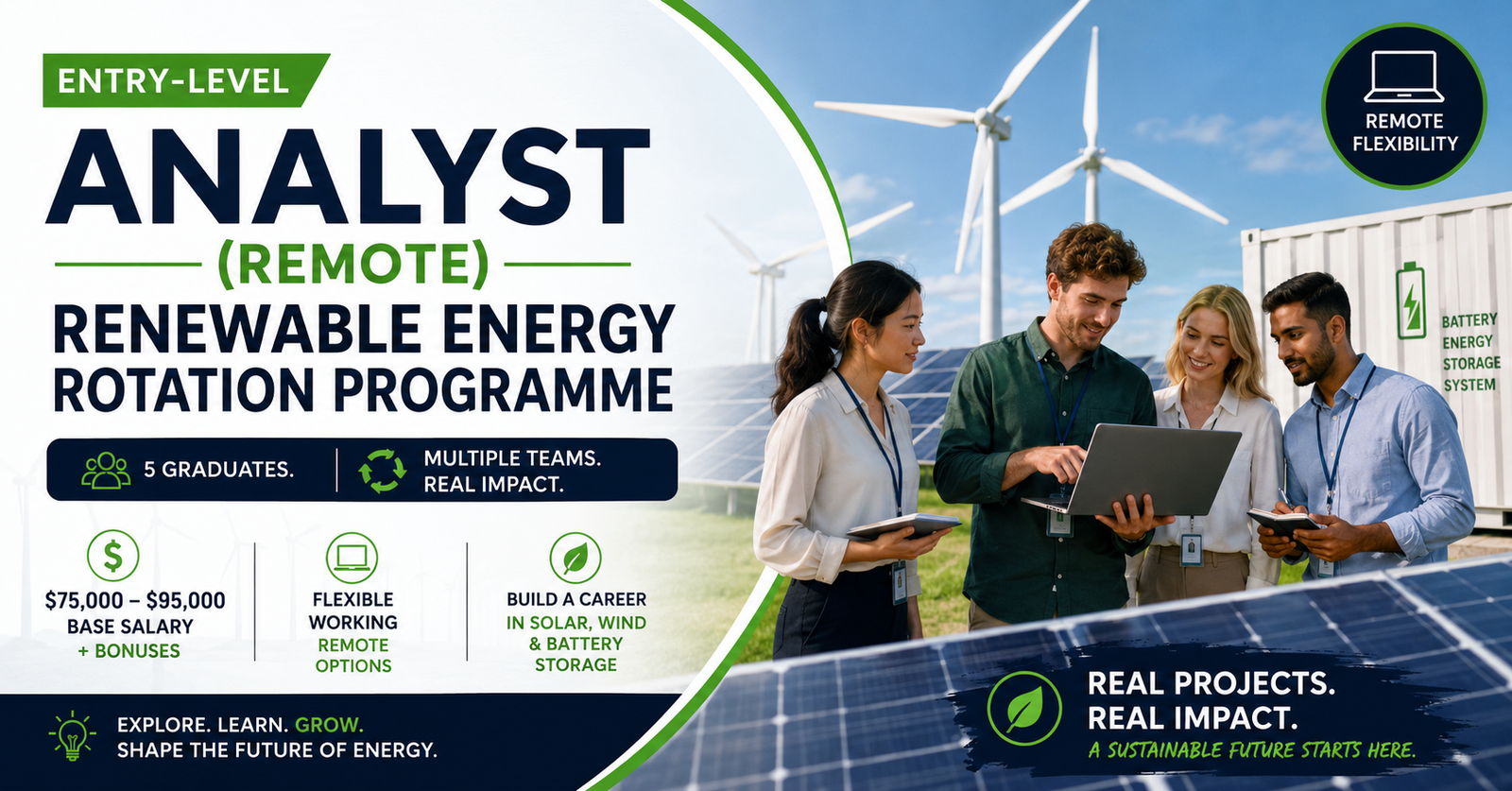
Entry-Level Analyst (Remote) — Renewable Energy Rotation Programme
Man, I remember scrolling through LinkedIn late one night, half-paying attention, when this renewable energy rotation programme listing popped up in my feed. I almost skipped past it because “entry-level” postings on LinkedIn are usually either fake filler jobs or they want five years of experience despite the title. But this one actually caught my eye, and after digging into it (and talking to a friend who went through a similar rotation programme in the solar industry), I figured it was worth breaking down for anyone else who’s stumbled across it or something similar.
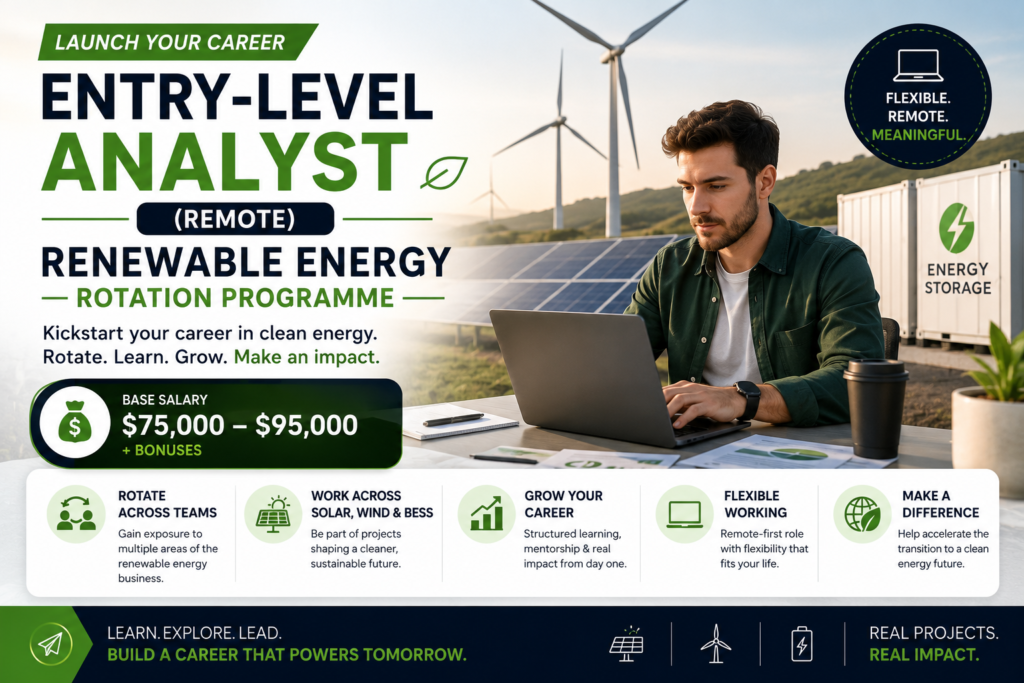
So here’s the deal. This isn’t your typical “sit at a desk and build spreadsheets” entry-level job. It’s a rotation programme with a renewable energy company that works across solar, wind, and battery storage (BESS, if you’re not familiar — that stands for Battery Energy Storage Systems). They’re bringing in five graduates to rotate through different teams. Base pay sits between $75,000 and $95,000, plus bonuses, which honestly is solid for someone fresh out of college with no real industry experience yet.
Why This Kind of Role Is Worth Paying Attention To
I’ve talked to a few people who did rotation programmes early in their careers, and the consensus is pretty consistent: it’s one of the smartest ways to figure out what you actually want to do without committing to one narrow lane right away.
Instead of getting locked into “you’re the data entry person now, forever,” you bounce between teams. Maybe you spend a few months on the construction side, then move to operations, then land somewhere in project planning. By the time the rotation wraps up, you actually know which part of the business excites you instead of guessing.
A buddy of mine did something similar at a wind energy company. He told me the biggest surprise wasn’t the technical stuff — it was how much of the job involved coordinating with contractors, permitting offices, and utility companies. He assumed it would be way more “engineering,” and it ended up being more project management and communication than he expected. That’s the kind of thing you only learn by actually being in the room.
What They’re Actually Looking For (And What That Really Means)
The listing says they want candidates with “any college degree background,” which sounds refreshingly open compared to most postings that demand a specific major. But don’t read that as “anyone can apply, zero effort needed.” They’re clearly leaning toward people with some exposure to renewables, engineering, planning, or construction — even if that exposure came from a class project, an internship, or a personal interest rather than a formal degree.
Here’s what I’d actually focus on if I were applying:
1. Show self-direction, not just teamwork. The posting specifically calls out wanting people who can work autonomously with minimum supervision. That’s a real signal. A lot of entry-level candidates lean hard on “I’m a team player” in interviews, which is fine, but this company wants proof you can figure things out without someone holding your hand. Think of a time you had to solve a problem with basically zero direction — a class project gone sideways, a part-time job where you had to make a call yourself, anything like that.
2. Talk about pressure and deadlines honestly. They mention working well under pressure with tight deadlines. Don’t just say “I handle stress well.” Give an actual example. Maybe it was finals week where three papers were due the same day, or a retail job during holiday rush. Renewable energy projects run on strict timelines because of permitting windows, weather, and grid connection schedules, so this isn’t just corporate buzzword filler — it’s genuinely how the job works.
3. Let your interest in sustainability actually show. This one trips people up. A lot of applicants say “I’m passionate about renewable energy” because it sounds good, but interviewers can usually tell within thirty seconds whether that’s genuine. If you’ve followed any solar or wind projects in the news, read about grid storage, or even just have opinions on why battery storage matters right now, bring that up. It doesn’t need to be an academic thesis — just show you’ve actually thought about it.
Step-by-Step: How I’d Approach Applying
If you’re thinking about applying to something like this, here’s roughly how I’d walk through it:
Step 1: Read the listing twice, slowly. It sounds obvious, but most people skim job postings and miss details. Notice this one says “5 graduates” specifically — that tells you it’s a structured cohort programme, not just one random opening. That changes how you should frame your application, because they’re likely also assessing how you’d fit into a group of new hires learning together.
Step 2: Tailor your resume toward outcomes, not just duties. Instead of listing “assisted with research project,” try “analyzed [specific thing] and presented findings to [group], which led to [result].” Even small results count. Recruiters skimming a hundred-plus applications (and yeah, this listing already shows over 100 applicants) respond to specifics way more than generic descriptions.
Step 3: Use the “Easy Apply” feature, but don’t rely on it alone. LinkedIn’s Easy Apply is convenient, but if you can find the actual hiring manager or recruiter for the renewable energy team and send a short, genuine message on LinkedIn, do it. I’ve heard from more than one recruiter that a short, non-generic follow-up message stands out simply because barely anyone does it.
Step 4: Prep for behavioral questions around autonomy and pressure. Given what the listing emphasizes, I’d bet money the interview leans heavily on behavioral questions like “tell me about a time you had to make a decision without guidance” or “describe a deadline you almost missed and how you handled it.” Have two or three stories ready before you walk in.
Click the button below to submit your application directly for this position.
A Mistake I See People Make With Listings Like This
Here’s something I’ve noticed repeatedly: people see “flexible working” and “remote” in the benefits and assume the whole role is remote-friendly and low-pressure. But rotation programmes in renewable energy often involve site visits, especially once you rotate into construction or operations teams. Don’t be shocked if there’s occasional travel or in-person time, even if the initial posting emphasizes remote flexibility. Ask about this directly in the interview instead of assuming.
Another mistake — and I’ve made this one myself in past job searches — is treating “entry-level” as “low effort application.” Just because they’re not demanding five years of experience doesn’t mean the bar is low. With over a hundred applicants already, plenty of people are treating this seriously, tailoring their resumes, and showing genuine interest in the sustainability angle. If you’re sending a generic, copy-pasted application, you’re basically opting out before you even start.
Final Thoughts
Renewable energy is one of those industries where the work actually matters, and rotation programmes like this one give you a real shot at figuring out where you fit before you’re locked into a narrow role. The pay is decent for entry-level, the structure gives you exposure across multiple teams, and if you’re genuinely interested in solar, wind, or battery storage, this is the kind of opportunity that’s worth putting real effort into.
If you’re applying, don’t just check boxes on the requirements list. Show them you can think independently, handle pressure without falling apart, and actually care about where the energy industry is headed. That combination is rarer than people think, and it’s exactly what stands out in a stack of a hundred-plus applications. If you’re ready to turn your skills into income, check out our full guide on Customer Support Specialist Jobs in California.