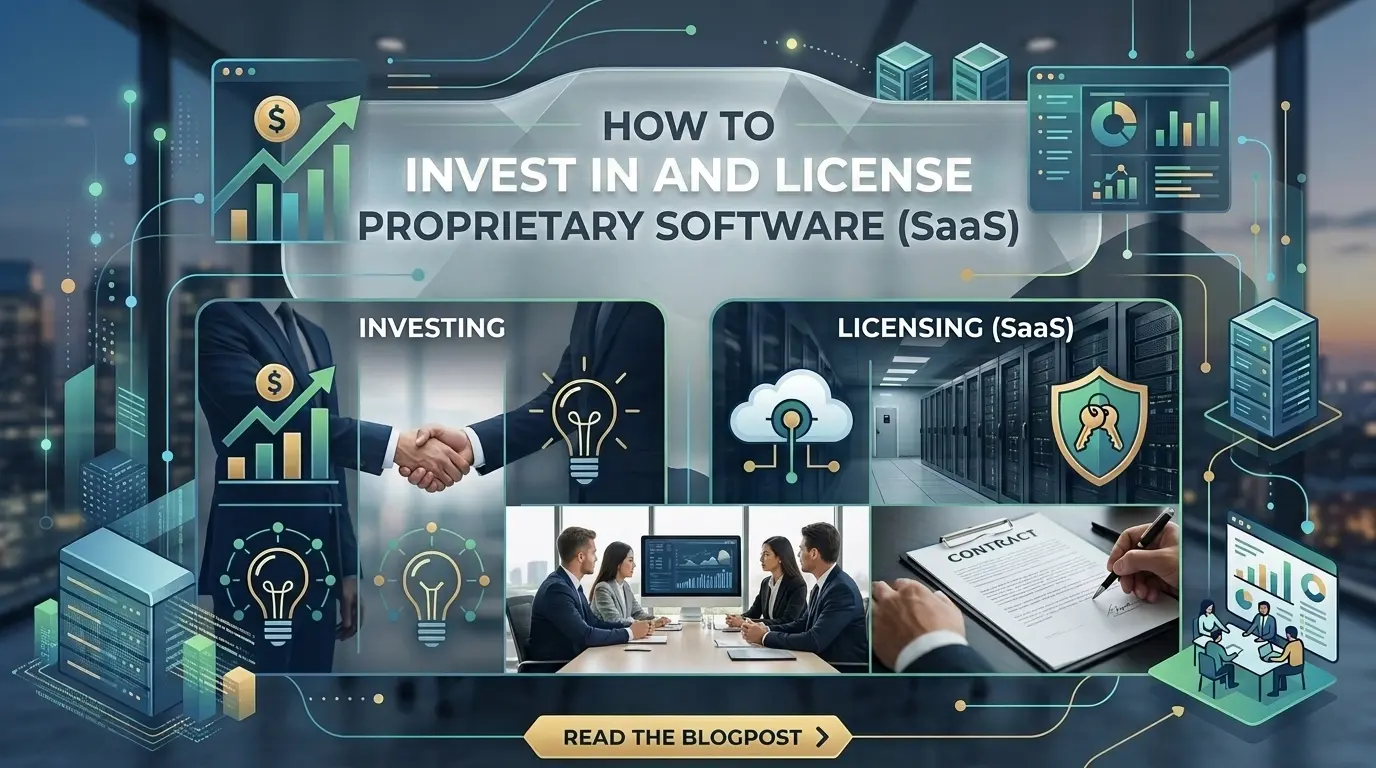
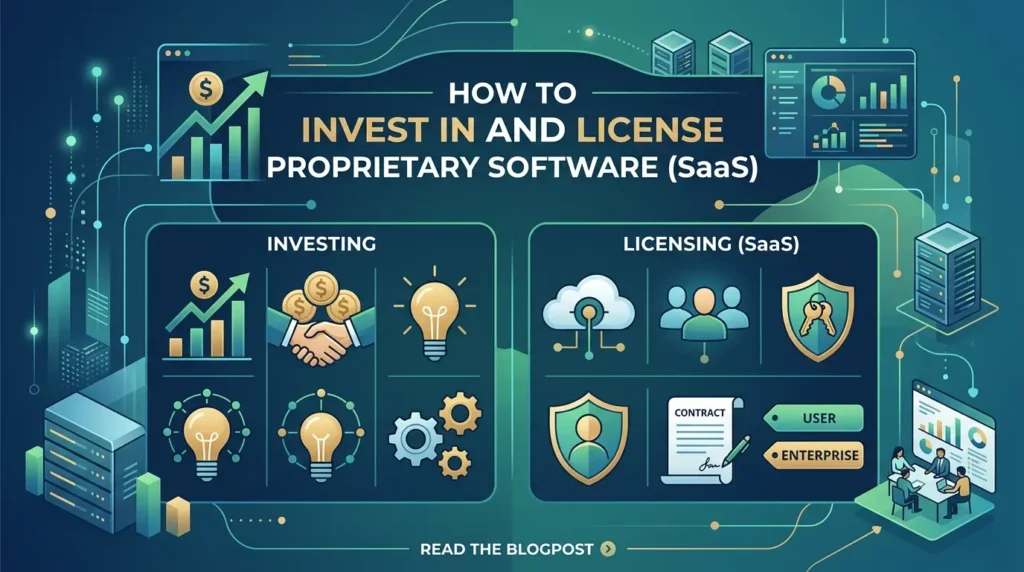
How to Invest in and License Proprietary Software (SaaS): What I Learned the Hard Way
A few years back, I got an email from a startup founder asking me a question I wasn’t expecting: “I’ve built a SaaS tool that’s generating $8K MRR — how do I let investors in without losing control of my product?”
I’d been writing about tech and software businesses for a while, but that question made me realize how little clear, practical information exists on this specific topic. Most articles either talk about using SaaS tools or building them — but investing in them? Licensing the underlying software? That’s a conversation that usually happens in boardrooms or on niche investor forums, not in plain English.
So I spent the next few months digging into it. I talked to SaaS founders, spoke with a couple of angel investors, and even made a small investment myself in a bootstrapped project management tool. Here’s everything I learned — including the stuff that surprised me.
Why SaaS Investment Is Different From Buying Stocks
Before anything else, let’s clear up a confusion I had early on.
When most people hear “invest in software,” they think of buying shares in Microsoft or Salesforce through a brokerage app. That’s one way to do it, sure. But that’s not really software investing — that’s just stock market investing in a tech company.
What I’m talking about is more direct: putting money into a specific SaaS product or licensing the rights to use, resell, or white-label it. These are two different things, and mixing them up is the first mistake beginners make.
Investing in SaaS means you’re putting capital into a software business in exchange for equity, revenue share, or a note that converts to equity later.
Licensing proprietary software means you’re paying for the right to use, distribute, or build on top of someone else’s software — without necessarily owning a piece of the company.
Both can be profitable. Both carry real risks. And both require you to do your homework in ways that feel nothing like clicking “Buy” on a trading app.
The Different Ways You Can Actually Invest
When I started looking into this properly, I realized there are more entry points than I expected.
1. Angel or Pre-Seed Investing
This is where you give money to an early-stage SaaS company in exchange for equity. Deals are often structured as SAFEs (Simple Agreement for Future Equity) or convertible notes.
The appeal here is that valuations are low early on — you might get 2–5% equity for $25,000 in a product that’s just hitting product-market fit. The risk is equally obvious: most early-stage products don’t make it.
I watched a friend put $15,000 into a SaaS invoicing tool for freelancers back in 2021. The founder was sharp, the product was clean, but they ran out of runway before they could crack enterprise sales. The investment went to zero. That stings.
2. Revenue-Based Financing (RBF)
This one flew under my radar for a long time. RBF is when you invest capital and receive a percentage of monthly revenue until you’ve been paid back a multiple of your original investment (usually 1.3x–2.5x).
Platforms like Clearco (formerly Clearbanc) and Pipe popularized this model. It’s not equity — you don’t own a slice of the company. But for investors who want more predictable returns from a cash-flowing SaaS, it can be a smart play.
I spoke to one investor who uses RBF exclusively for SaaS deals. Her logic: “I don’t want to wait 7 years for a liquidity event. I want monthly payments, and I want out in 18 months.” Hard to argue with that.
3. Buying an Existing SaaS (Micro-Acquisitions)
This is honestly where things get exciting for individual investors.
Platforms like Acquire.com, MicroAcquire, FE International, and Empire Flippers list SaaS businesses for sale — often small, profitable tools with anywhere from $500 to $500,000 in annual recurring revenue.
Multiples typically range from 3x–5x ARR for healthy SaaS businesses. So a tool doing $2,000/month ($24K ARR) might sell for $72,000–$120,000.
I’ve seen people buy small B2B tools — things like niche scheduling software, email validation APIs, or white-label reporting dashboards — and either run them passively or grow them with smart marketing. One person I follow on Twitter bought a Shopify analytics tool for $40K, added two new integrations over six months, and sold it for $140K. Not bad.
Understanding Software Licensing (And Why It Matters for Investors)
Here’s where most newcomers completely zone out — and that’s a mistake.
If you’re investing in a SaaS company or buying one, the software licensing structure directly affects the value of what you’re getting.
Types of Licenses You’ll Encounter
Proprietary License — The company owns the code entirely. You’re buying rights to use it, not own it. Most SaaS products operate this way.
White-Label License — You pay to rebrand and resell someone else’s software as your own. This is huge in agency and reseller models. Tools like GoHighLevel built their entire business model on white-labeling.
OEM License — You embed proprietary software inside your own product. Think of how many apps use Stripe’s payment infrastructure under the hood.
Perpetual vs. Subscription License — Perpetual means you pay once and own the rights forever (uncommon in SaaS). Subscription means recurring payments for continued access.
When I was evaluating a potential investment in a project management SaaS, one of the first things I asked the founder was: “Do you have any open-source dependencies with GPL licenses?” He looked at me like I’d asked about his blood type.
But it matters. If a SaaS product uses GPL-licensed code in its core, that can create legal complications around distributing or monetizing the software — especially if you’re buying the whole company.
Due Diligence: The Part Nobody Tells You About
Before you invest in or license any SaaS product, you need to do proper due diligence. Here’s the checklist I now run through.
1. Verify Revenue and Chur:n Ask for Stripe or payment processor screenshots, not just a spreadsheet. Look at monthly churn rate — anything above 5% monthly is a red flag for a subscription product.
2. Check the Tech Stack: What is the product built on? Is the codebase maintainable? If you’re buying the business and the backend is held together with duct tape, you’re inheriting that problem. I always recommend getting a technical audit done by an independent developer.
3. Understand the Customer Base: Are there 3 customers paying 80% of the revenue? That’s a dangerous concentration. Healthy SaaS products have distributed revenue across many customers.
4. Review the License Agreements. If you’re acquiring or licensing the software, have a lawyer look at the terms. Specifically check: IP ownership, what happens if the company dissolves, data portability rights, and indemnification clauses.
5. Assess Dependency on the Founder.r I once looked at a SaaS tool where literally every customer success interaction ran through the founder’s personal Gmail. The product itself was decent, but the business was completely unsellable in that state.
How to License Proprietary Software (If You’re on the Buyer Side)
Maybe you’re not investing — you want to license existing software to power your own business or product. Here’s how that process usually works.
Step 1: Identify what you actually need. Do you need a white-label solution, an API integration, or a full OEM agreement? Get clear on this before you contact anyone.
Step 2: Request a licensing conversation. Most SaaS companies with mature products have a “Partnerships” or “Enterprise” page. Email them directly and explain your use case. Small companies, especially, are often open to custom deals.
Step 3: Negotiate the terms carefully. Key things to negotiate: exclusivity (do you want to be the only reseller in a market?), pricing model (per seat, revenue share, flat fee), and termination clauses (what happens if they get acquired?).
Step 4: Get it reviewed legally. I cannot stress this enough. A software licensing agreement is a legal document. Spend the $300–$500 on a tech lawyer to review it before signing.
Step 5: Plan for vendor dependency. What’s your exit strategy if the vendor shuts down or triples prices? Always negotiate data export rights and, where possible, escrow arrangements for the source code.
Mistakes I’ve Seen (And Almost Made)
Skipping the churn data. A friend bought a SaaS tool with $6K MRR and discovered post-acquisition that monthly churn was 8%. The business was on a slow bleed.
Not understanding the license scope. One blogger I know licensed a white-label email marketing tool, started reselling it, and then got a cease-and-desist because the license didn’t include resale rights. She just hadn’t read the fine print.
Overvaluing “potential.” Every founder says their product is about to land a big enterprise client. Invest based on what the business is doing right now, not what it might do next year.
Ignoring the renewal terms. Some licensing agreements auto-renew at higher rates. Others lock you in for 24 months. Read the renewal and termination clauses before you sign anything.
Where to Start if You’re Serious
If you want to start small, Acquire.com is genuinely a great place to browse active SaaS deals — you can filter by ARR, MRR, and industry. For licensing opportunities, look at AppSumo partners (many offer white-label deals) or reach out directly to niche SaaS tools in your industry.
If you want to invest at the equity level without picking individual deals, platforms like AngelList and Republic list SaaS-heavy startup opportunities open to non-accredited investors.
And if you’re evaluating a micro-acquisition, the Indie Hackers community and MicroAcquire’s newsletter are genuinely solid places to learn from people doing these deals every week.
Final Thoughts
This space rewards patience and specificity. The people I’ve seen do well investing in or licensing SaaS aren’t the ones swinging for unicorns — they’re the ones who found a $3K/month tool solving a boring, specific problem, bought it for a fair multiple, and quietly grew it for two years.
It’s not glamorous. But it’s real.
Do your homework, read the license agreements, verify the revenue, and don’t let FOMO rush you into a deal that doesn’t make sense on paper. The right deal will still be there after you’ve done your due diligence. If you’re ready to turn your skills into income, check out our full guide on the Top 5 SaaS Hosting Affiliate Networks for Beginners.
1 thought on “How to Invest in and License Proprietary Software (SaaS)”